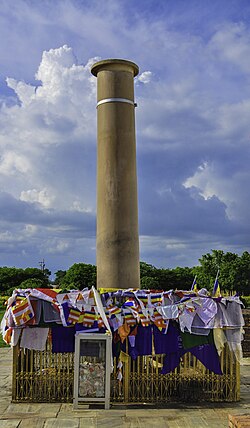
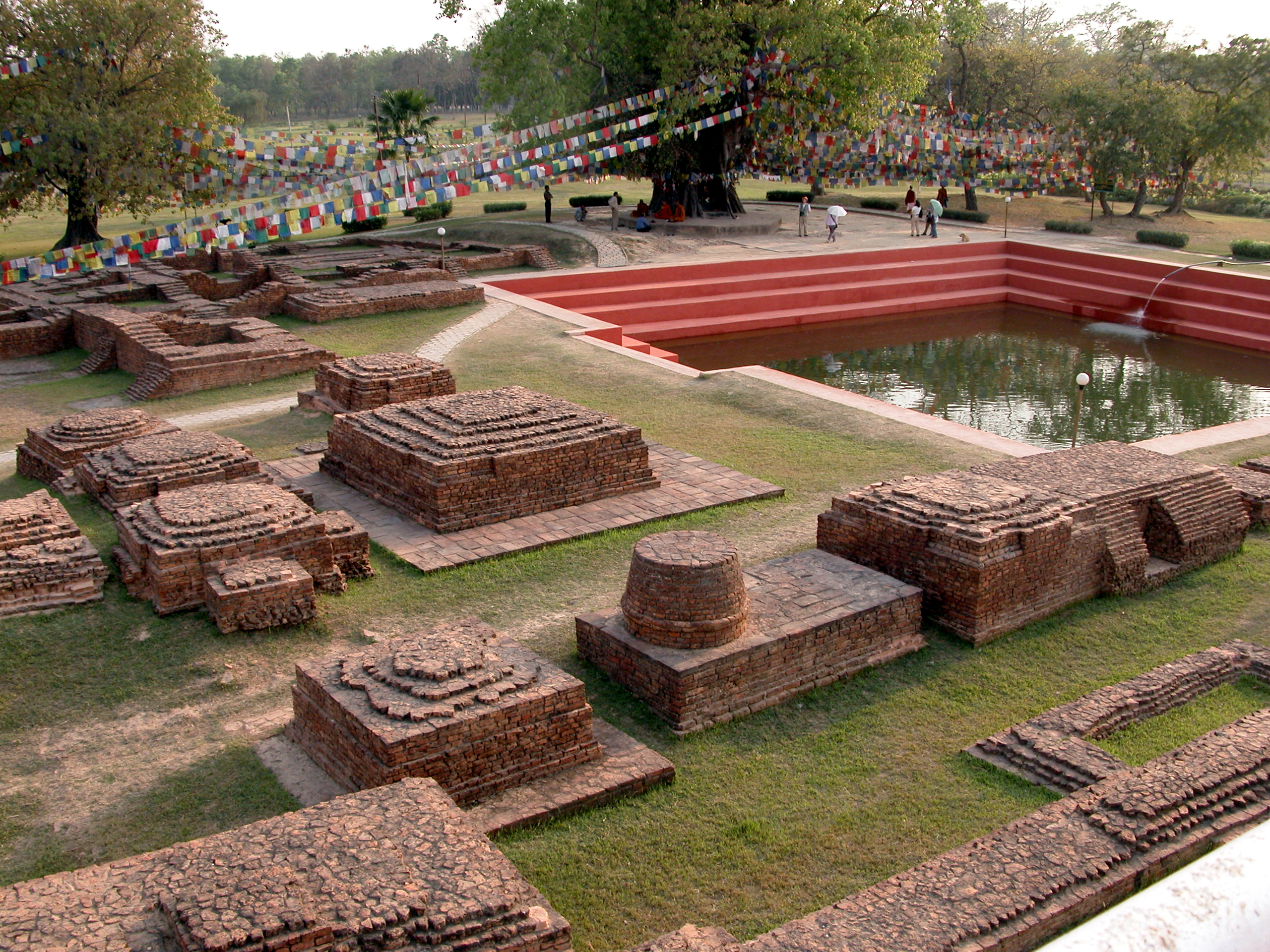
Lumbini, located in Nepal, holds immense historical and religious significance as the birthplace of Siddhartha Gautama, who later became the Buddha. It is one of the most important Buddhist pilgrimage sites, drawing visitors from all over the world. The site contains archaeological remains dating back to the 3rd century BCE, including the Maya Devi Temple, the Ashoka Pillar, and various monasteries and stupas.
In the time of the Buddha, Lumbini was situated east of Kapilavastu and south-west of Devadaha of Shakya, an oligarchic republic. According to the Buddhist tradition, it was there that the Buddha was born. Ashoka Pillar of Lumbini, a monolithic column with an inscription in the ancient Brahmi script discovered at Rupandehi in 1896, is believed to mark the spot of Ashoka's visit to Lumbini. The site was not known as Lumbini before the pillar was discovered. The translation of inscription (by Paranavitana).
When King Devanampriya Priyadarsin had been anointed twenty years, he came himself and worshipped (this spot) because the Buddha Shakyamuni was born here. (He) both caused to be made a stone bearing a horse and caused a stone pillar to be set up, (in order to show) that the Blessed One was born here. (He) made the village of Lumbini free of taxes, and paying (only) an eighth share (of the produce).[note 2]
The park was previously known as Rupandehi, 2 mi (3.2 km) north of Bhagavanpura. The Sutta Nipáta (vs. 683) states that the Buddha was born in a village of the Sákyans in the Lumbineyya Janapada. The Buddha stayed in Lumbinívana during his visit to Devadaha and there preached the Devadaha Sutta.